
President Donald Trump said Israeli Prime Minister Benjamin Netanyahu has to be “more responsible with respect to Lebanon” amid concerns the renewed fighting with Hezbollah could derail the U.S.-Iran peace agreement.
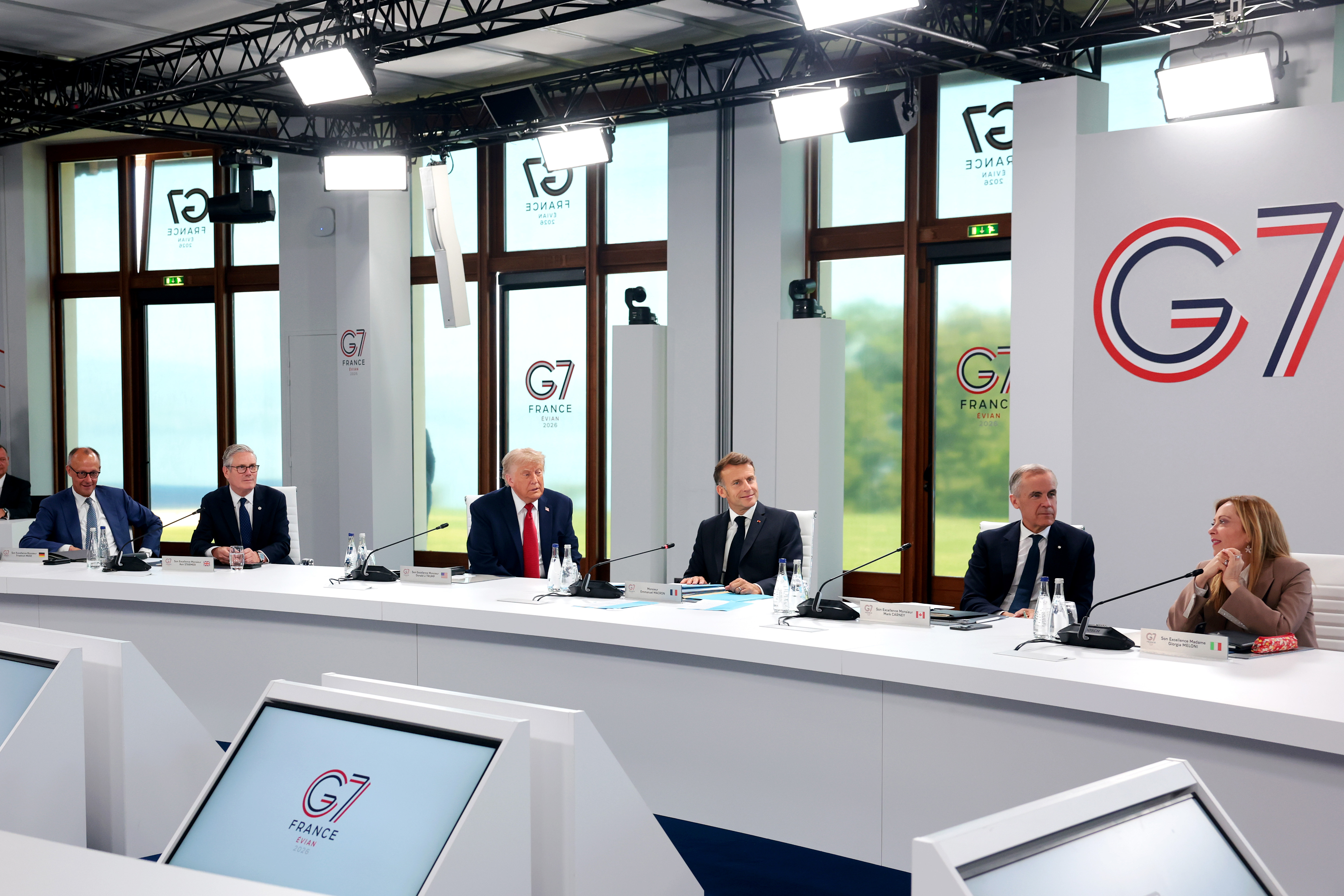
“I'm not happy with the way Israel has handled themselves with Lebanon and with Hezbollah. They should have been able to do the job faster,” Trump told reporters Tuesday, at the G7 summit in France.
“It just goes on forever,” he continued, seemingly referencing the exchanging of strikes between Israeli forces and the Hezbollah militant group. “When that happens, it throws a negative light on the big deal, the deal with Iran.”
Trump said he has an “unbelievable relationship” with Netanyahu, but claimed “Israel would have been blown up a long time ago, had I not gotten involved.”
Since the Israel-Hezbollah fighting reignited in March, early on in the Iran war, at least 3,783 have been killed in Lebanon, with 11,699 wounded, according to the country’s Health Ministry.
But Trump, as he spoke alongside Qatar’s Emir Tamim bin Hamad Al Thani and U.S. Secretary of State Marco Rubio at the summit, said he considers the war to be “minor.”
"I consider that the minor war. Iran’s the big one, but we have that little pinprick out there that constantly rears its head and that’s Hezbollah,” he said.
Trump then argued that Syria, under its leader Ahmed al-Sharaa, would be better suited to deal with Hezbollah.
“I suggested to Israel to let Syria take care of Hezbollah, because to be honest with you, I think they would do a better job,” he argued.
The public rebuke from the U.S. President came after Netanyahu, during a televised address Monday evening, ruled out any immediate withdrawal from Lebanon.
Netanyahu said they had established deep security zones around the “State of Israel,” and that this had been done in Gaza, Lebanon, and Syria. “We will remain in the security zones for as long as it is required to defend our country,” he vowed.
Some Israeli officials have reacted negatively to the U.S.-Iran agreement, insisting that “Israel is not subject to the United States.”
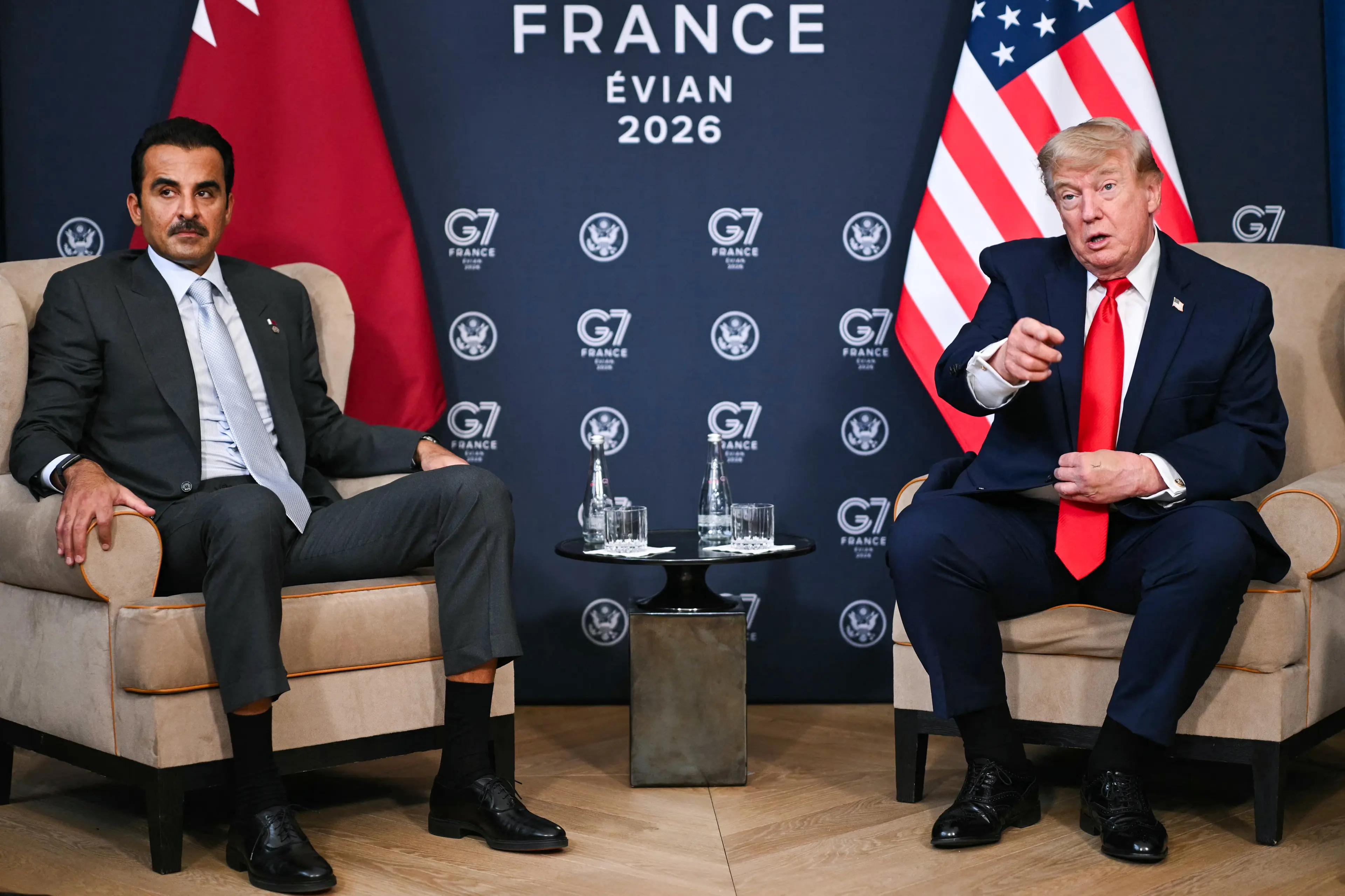
Qatar's Emir Sheikh Tamim bin Hamad al-Thani and U.S. President Donald Trump address reporters after a bilateral meeting during the G7 summit, in Evian, France, on June 16, 2026. Mandel Ngan—Getty Images
What do we know about the U.S.-Iran peace deal to end the war?
Although the parallel conflict between Israel and Hezbollah remains a risk-factor, Trump expressed confidence in the deal to halt the months-long Iran war.
He said the agreement, which has been digitally signed by Trump and Iran’s lead negotiator, has now moved into the “second stage.”
However, the exact framework of the deal has yet to be made public and both the U.S. and Iran say a permanent truce has yet to be negotiated.
Trump said he will send the eventual text of the agreement with Iran to Congress for review. "I never thought about sending it, never even thought about it, but I will. I will send it to Congress," he admitted.
He also said he will publicly release the text of the memorandum in a "formal setting."
Vance, who is expected to attend the official signing of the deal in Geneva on Friday alongside Iran’s top negotiator Mohammad Bagher Ghalibaf, has described the memorandum of understanding as “a very general” document, around “a page and a half” long.
Trump has heralded the guarantees he says it provides that prevent Iran from developing or purchasing a nuclear weapon.
“They're not going to acquire a nuclear weapon. If they do, all hell will rain down on them, and they're not going to do that,” Trump told reporters.
Officials have indicated that the future of Iran's nuclear program and broader regional security arrangements will be deferred to subsequent negotiations.
Another contentious issue that had proven to be a key stumbling block in the negotiations was Iran’s ambitions to control the Strait of Hormuz by tolling vessels that require passage.
Trump has said the agreement assures that the vital trade passage, which Iran has used as a geopolitical bargaining chip since the start of the war, will be fully reopened on Friday with no tolls.
Meanwhile, experts say it could be weeks or months before traffic in the Strait, through which around a fifth of global oil production flows, returns to its pre-war state.






 English (US) ·