
Mar 18, 2026

By MICHAEL MILLENSON
At the recent Academy Awards broadcast, a brief film clip from the Oscar-nominated Iranian film “It Was Just An Accident” showed a man pushing an unconscious, very pregnant woman on a gurney into a hospital emergency room. Without intending to do so, the excerpt pointed to one of the many common concerns shared by Iranians and Americans when dealing with their respective health care systems.
In the Iranian movie, a hospital desk clerk turns away the woman for lack of a payment up front with cash or a credit card. Although that kind of rejection is supposed to be illegal in America, indigent patients can be turned away if the hospital simply tells them their problem isn’t urgent. Even if accepted as self-pay, they might find themselves being billed up to 13 times what the hospital accepts from the government.
Yet it’s not just high costs and unfeeling bureaucrats that worry both Americans and Iranians – although Oscars host Conan O’Brien did joke that in the movie “Hamnet,” Shakespeare’s wife giving birth alone in the woods was “what we call in America ‘affordable health care.’” Iran is an urbanized nation of 93 million people. While the radical hostility to Western values of its clerical rulers is an important contributor to the current war with America, the society as a whole struggles with many of the same health-system problems as other developed countries, including the United States, and often approaches them in a similar way. Still, there are some exceptions unique to the Iranian context.
Consider Iranian researchers articles about diabetics’ experiences at the doctor’s office; ensuring a future supply of nurses; and health insurance utilization and expenditures for a particularly vulnerable population. Though all are topics which might equally appear in a U.S. journal, what sets them apart here is the authorship. At least one co-author of each is affiliated with an institution whose origins would seem as far away from health services research as imaginable. That’s Teheran’s Baqiyattalah University of Medical Sciences, (pictured below) which was founded by the Islamic Revolutionary Guard Corps.
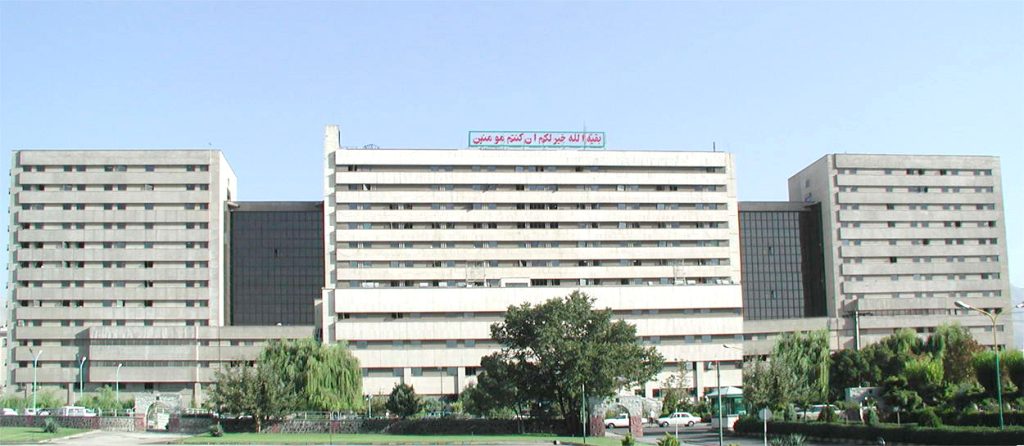 By غلامرضا باقری – Own work, CC BY-SA 3.0, https://commons.wikimedia.org/w/index.php?curid=18235725
Affiliation aside, Iranian researchers are typically trained much like their U.S. counterparts, and that’s reflected in both their work and the international journals where it’s published.
For instance, the study of diabetics used a standardized questionnaire from the World Health Organization. And the nursing study drew upon a diverse research team that included researchers from a nursing faculty, a “Lifestyle Institute,” a School of Nursing and Midwifery, a cancer research center and a health management research center.
Nonetheless, there are also areas of sharp difference. The “vulnerable population” whose health care utilization and expenditures Iranian researchers focused upon was a cohort of 59,000 individuals who’d survived sulfur mustard gas exposure during the Iran-Iraq war. (In an unfortunate misspelling in the English version of the article, the statistical technique of “poisson regression” was written as “poison.”)
Another study probed the “impacts of economic sanctions on population health and health systems” in Iran from 2000 to 2020. The imposition of those sanctions, of course, was led by the United States as part of a “cold war” over potential Iranian nuclear capabilities that has now erupted into a “hot war.” The sanctions’ impact on the Iranian population included increased health care costs, worse outcomes for those with chronic disease and widespread dissatisfaction by patients and providers alike with the difficulty of accessing essential medicines.
The researchers added that these types of adverse effects had also been documented in Iraq, Cuba, Libya, Venezuela and Russia. Interestingly, the Iranian study was cited in a commentary on the use of medical sanctions published in April, 2025 in the American Journal of Bioethics.
Speaking of ethics, a 2020 study of “Barriers to healthcare delivery in Iranian prisons” somehow avoided mentioning a detailed 2016 report by Amnesty International alleging “cruel denial of medical care” to some prisoners. Violations of human rights included denying desperately needed surgery and medications to political prisoners in order to coerce confessions.
Still, Iranian researchers also produce the type of critical studies considered routine in democracies. These included investigating factors associated with “failure” of health system reform; out-of-pocket health care costs being higher in Iran than other high-spending countries, including the United States; and a systematic review of the “challenges and weaknesses of leadership and governance-related health policies in Iran.”
Meanwhile, parts of a commentary on Iranian health reform could almost be cut-and-pasted into any U.S. policy journal. After listing achievements such as greater equity in access to care and improvements in maternal and child mortality, the commentary points to remaining challenges related to the high cost of care, rationalizing service utilization and providing high-quality care to all, in part by addressing social determinants of health.
The only element that would need to be deleted is the notation that all of these efforts are meant to help the country reach its proclaimed goal of “universal health coverage.” U.S. political leaders, in contrast, have yet to consider universal health coverage as urgent a moral and economic goal as the mullahs who rule Iran.
Michael L. Millenson is president of Health Quality Advisors LLC, a patient safety expert and activist, and the author of the classic Demanding Medical Excellence (1997)















 English (US) ·