
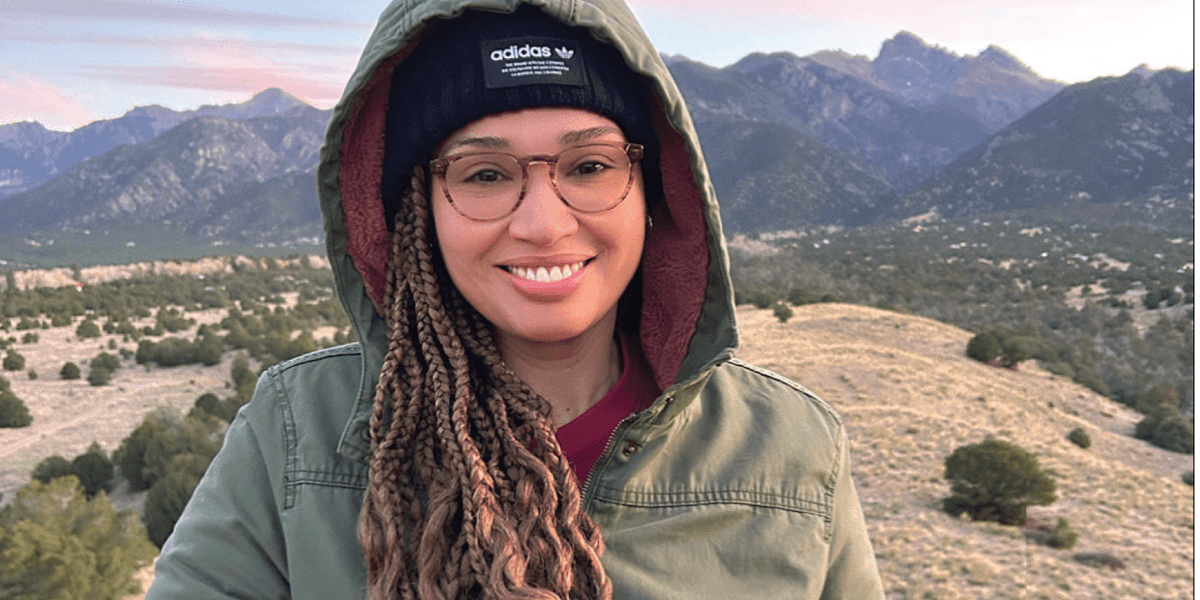
Dr. Janell Green Smith, one of the most treasured voices in the fight against Black maternal mortality, died in childbirth on January 2nd. She was 31 years old.
Green Smith, a certified nurse-midwife, disseminated valuable information about gaps in Black maternal health outcomes on social media. She went by the moniker the “Loc’d Midwife.”
She is survived by her husband, newborn, and the many people whose lives she touched by practicing her life’s calling of “catching babies.”
Dr. Green Smith’s Advocacy
She worked with the non-profit The Hive Impact Fund to support mothers and mothers-to-be with the resources required to expand and maintain their families.
Her death was met with an outpour of mourning on social media. The American College of Nurse-Midwives issued a statement expressing their grief, sadness, and outrage at the unexpected news. It appeared across their social channels.
“Dr. Smith was a respected midwife, scholar, and advocate whose life and work reflected a deep commitment to respectful, evidence-based, and equitable care. That a Black midwife and maternal health expert died after giving birth in the United States is both heartbreaking and unacceptable,” they wrote.
“Her death underscores the persistent and well-documented reality that Black women-regardless of education, income, or professional expertise-face disproportionate risks during pregnancy and childbirth due to systemic racism and failures in care,” they continued.
Black Women Are at Increased Risk Despite Education, Income, or Professional Expertise
Green Smith’s tragic death is a heartbreaking example of the Black maternal health crisis. In 2024, the Centers for Disease Control (CDC) reported that “Black women are three times more likely to die from a pregnancy-related cause than White women.” The International Journal for Equity in Health describes Black maternal mortality in the United States as “one of the most alarming and persistent indicators of racial injustice.”
“Most maternal deaths are preventable, as the health-care solutions to prevent or manage complications are well known,” according to the World Health Organization. To prevent these tragic occurrences, competent and caring providers must be available.
The Rise of Maternity Deserts
Location plays a role in maternal health outcomes. A new report highlights a dwindling supply of obstetricians and gynecologists in non-metropolitan areas. Rural residents are particularly at risk.
Areas such as Green Smith’s home state of South Carolina are sometimes referred to as “maternity deserts.”
According to the Journal of Obstetrics & Gynecology, “The shortage of ob-gyns in 10 years is projected to progressively worsen by today’s standard practice patterns.” By 2035, “Only six states (Hawaii, New York, Connecticut, Maryland, Rhode Island, Louisiana) were projected to continue to have an adequate supply.” The U.S. Department of Health and Human Services projects a shortage of obstetricians and gynecologists; its forecasts indicate that there will not be enough physicians in the specialty to meet the nation’s needs by 2037.
This is Not a Socioeconomic Issue Alone
Some dismiss the Black maternal health crisis because of poverty and preexisting conditions alone. A 2020 article from the World Journal of Gynecological Women’s Health points out that “Racial disparity exists in maternal mortality despite correcting for commonly cited reasons” and “It is a problem for Black American women and cannot be explained by socioeconomic factors alone.”
Black maternal health challenges traverse tax brackets and class boundaries. “These outcomes cannot be understood through individual behavior, access, or socioeconomic status alone,” reports the International Journal for Equity in Health.
Young, beautiful, educated, well-off Black women die in childbirth due to neglect.
Angelica Lyons, as Green Smith did, works to advocate against the ways medical racism impacts birthing people. Her work took place in the classroom. In 2023, she told the Associated Press that she nearly died from sepsis after her pain was ignored by an Alabama hospital. She reported that the severe pain she was experiencing was dismissed as Braxton Hicks contractions by healthcare professionals who did not take her seriously. Her dilemma showed how racial bias in pain assessment can interfere with providing adequate maternal care.
How We Can Combat This Issue
Public figures, including the editor-turned-television personality Elaine Welteroth, have joined the fight to address the crisis. Welteroth’s BirthFund raised money to expand access to midwifery with support from her Founding Family Funders, including Kelly Rowland and Serena Williams.
Williams’ harrowing birth story was so widely reported that it became a footnote in an episode of Insecure. The tennis star turned venture capitalist experienced a pulmonary embolism following the birth of her daughter, Olympia. Her story of demanding that the doctors take her concerns seriously frightened many.
Fighting For Reproductive Justice is Critical
“To address the disparities in Black maternal health, expanding access to midwives and doulas is essential. Midwifery care reduces preterm births and cesarean delivery rates and improves breastfeeding outcomes, particularly among Black mothers. Doulas provide invaluable emotional and physical support during pregnancy and childbirth, mitigating racial biases and fostering trust in the health care system,” according to The National Center for Chronic Disease Prevention and Health Promotion.
Black Maternal Health Week was founded in 2016 to encourage collective action and community engagement in support of reproductive justice. It amplifies the voices of Black organizations supporting people who give birth and their families.
They connect the public with individuals who provide life-changing care, such as Green Smith.
Our thoughts and prayers are with the family of Dr. Janell Green Smith.
Resources
International Journal for Equity in Health
Journal of Obstetrics & Gynecology
U.S. Department of Health and Human Services
World Journal of Gynecological Women’s Health
Proceedings of the National Academy of Science
The National Center for Chronic Disease Prevention and Health Promotion








![Savory Vegan Granola [gluten-free + no added sugar]](https://i0.wp.com/healthyhelperkaila.com/wp-content/uploads/2026/02/SavoryGranola3.png?fit=800%2C800&ssl=1)

![Vegan Chinese 5-Spice Noodle Soup [gluten-free + oil-free]](https://i0.wp.com/healthyhelperkaila.com/wp-content/uploads/2025/12/ChineseNoodleSoup17.png?fit=800%2C800&ssl=1)
 English (US) ·